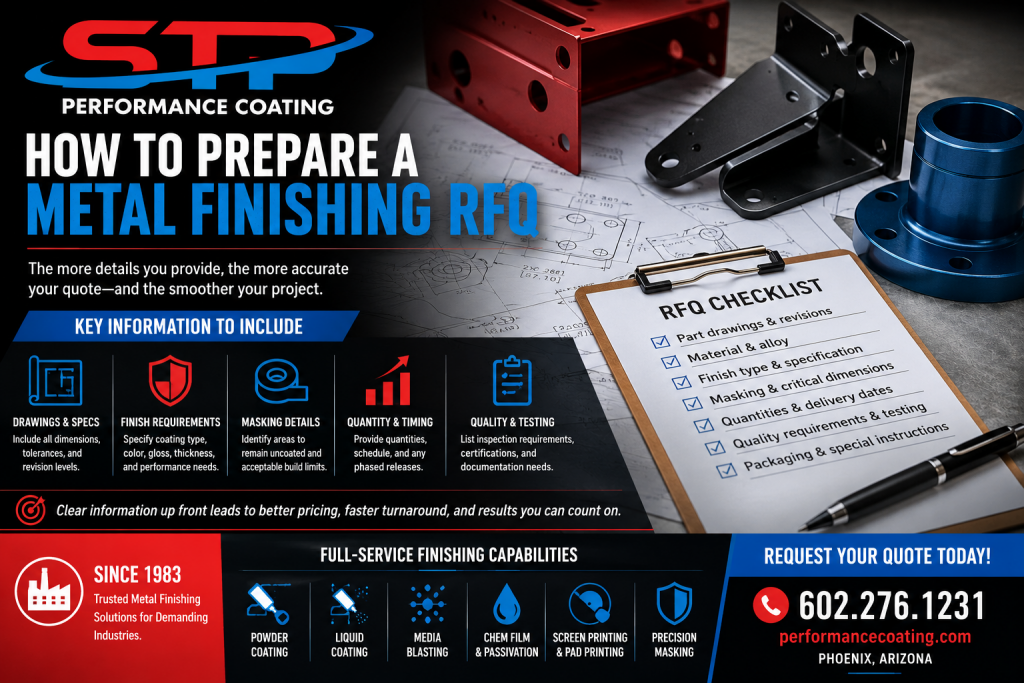
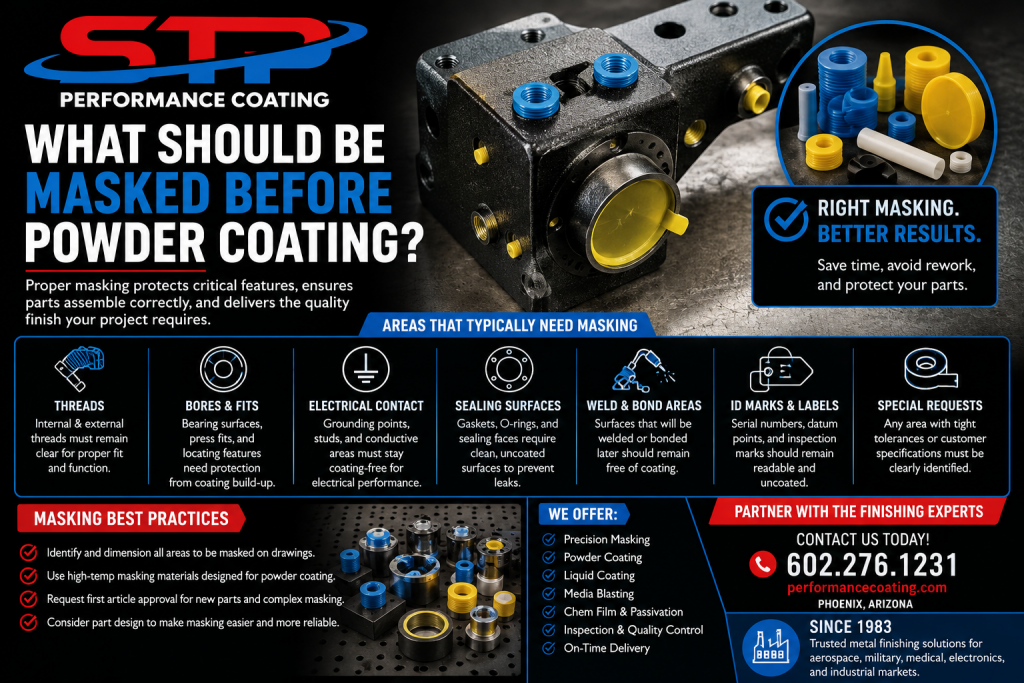
What Should Be Masked Before Powder Coating?Powder coating creates a durable finish because the powder is applied electrostatically and cured with heat. That same strength can become a problem when coating reaches a thread, bearing fit, electrical contact, sealing face, or other area that must remain clean.Good powder coating masking begins on the drawing. The customer and finisher should agree on protected areas before the first production run, not after a coated part refuses to assemble.Mask Threads That Must Remain FunctionalInternal and external threads often need protection from powder buildup. Coating inside a threaded hole can prevent a fastener from starting, change torque, or leave a rough edge when the thread is chased after finishing.High temperature silicone plugs, caps, and thread masks are common because they withstand the cure cycle and can be removed after cooling. The correct product depends on the hole diameter, thread form, depth, and whether the first thread or surrounding face must remain bare.Blind holes need attention. A plug pushed too deeply may be difficult to remove, while a loose plug can allow powder to enter.Protect Bores, Fits, and Mating SurfacesBearing bores, dowel holes, press fits, bushings, shafts, and machined locating surfaces may have little tolerance for added thickness. Powder on both mating parts can create twice the interference expected from one coated surface.Mark the exact coating limit on the drawing. Include a dimension from a stable feature rather than asking the masking technician to estimate where the finish should stop.Sealing faces and gasket lands may also need protection. A raised edge or uneven film can prevent full contact and create leakage.Keep Electrical Contact and Grounding Areas CleanSome assemblies require bare metal for electrical continuity, grounding, bonding, or shielding. Those locations should be identified deliberately.A masking plug or washer can protect the hole while leaving a controlled ring of bare metal around it. Other parts may need a masked pad, stud, tab, or contact face. The size and location should match the electrical design.The finisher also needs a place to hang and ground the part during application. That rack point may leave a small witness mark, so it should be placed where it will not affect appearance or function.Identify Areas Needed for Welding or AssemblyPowder coating should normally be kept away from surfaces that will be welded later. Welding heat can burn the coating and contaminate the joint area.Bonding surfaces may require a specified preparation rather than a powder layer. The engineering drawing should determine whether the area remains bare, receives a conversion coating, or uses another approved treatment.Do not forget labels, serial numbers, datums, and inspection marks that must remain readable.Show the Masking on the DrawingA verbal instruction can be misunderstood when the part has several similar holes or surfaces. Use a marked drawing with dimensions, section views, and notes identifying every masked feature.STP Performance Coating requires first run masking approval for new parts. That step lets the customer confirm edges, witness marks, and protected surfaces before the rest of the lot is processed.When coating thickness is critical, state the maximum permitted build and the surfaces where it applies.Design Parts With Masking in MindA clean masking edge is easier to create when the part offers a defined shoulder, groove, flange, or break line. Irregular transitions and hidden recesses take longer to mask and inspect.Repeated production work may justify custom plugs, die cut masks, or dedicated tooling. Tooling can improve repeatability and reduce labor across a long run.Send a mating component when the relationship is difficult to explain. A physical fit check can reveal a concern that is not obvious on a drawing.Arrange Precision Masking and Powder Coating in PhoenixSTP Performance Coating handles powder coating, surface preparation, custom masking, first article inspection, and production finishing for military, aerospace, medical, electronics, semiconductor, construction, and commercial customers. Call 602 276 1231 with the drawing, alloy, coating specification, quantity, and masking requirements so critical surfaces remain ready for assembly.Live ReferencesSTP Performance Coating Other Processeshttps://www.performancecoating.com/other.htmSTP Performance Coating Quality Managementhttps://www.performancecoating.com/quality-management.htmCaplugs Masking Protection Solutionshttps://www.caplugs.com/assets/pdf/Shercon-Masking.pdfProducts Finishing: Masking Features for Liquid and Powder Coatinghttps://www.pfonline.com/articles/how-to-mask-common-part-features-for-liquid-and-powder-coatingSundial Powder Coating Masking Guidehttps://sundialpowdercoating.com/articles/powder-coating-masking-techniques-guide