

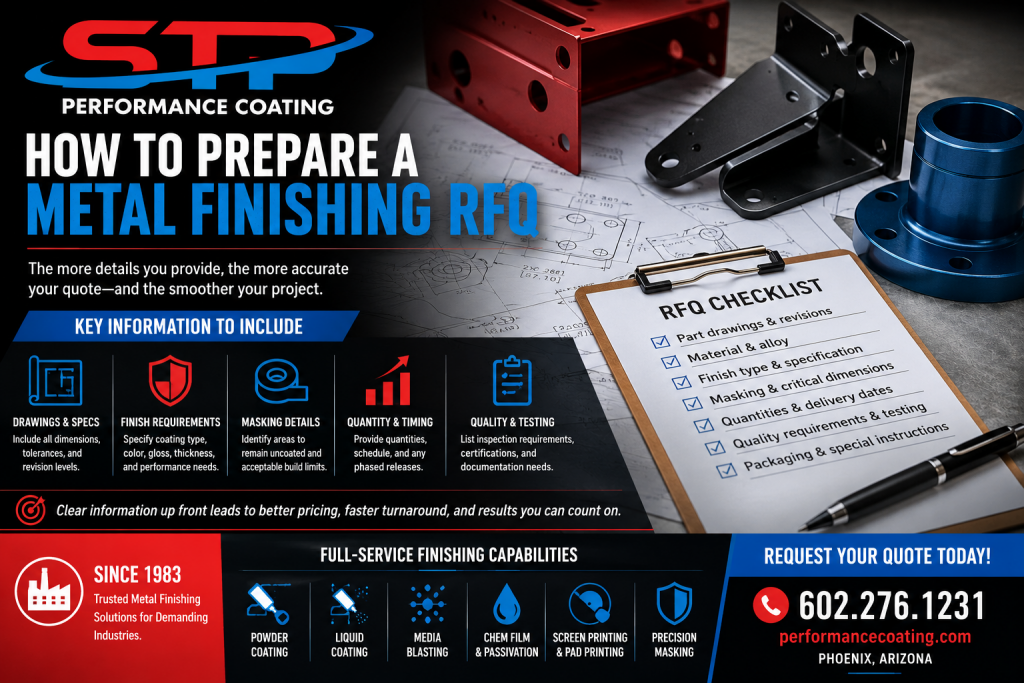
How to Prepare a Metal Finishing RFQ That Gets an Accurate Quote
A metal finishing quote can only be as precise as the information supplied with the request. A part number and a note saying “powder coat black” may begin a conversation, but they leave questions about the alloy, coating system, masking, appearance, inspection, quantity, and delivery schedule.
A complete metal finishing RFQ helps the processor understand the work before pricing it. It also reduces delays after the parts arrive, when a missing drawing note or unclear specification can stop production.
Identify the Part and Base Material
Start with current part number, drawing revision, material and alloy. Preparation, pretreatment and curing of aluminum, carbon steel, stainless steel, castings and molded components may require different decisions.
State whether the parts are new, previously coated, welded, machined, heat treated, or repaired. Photographs should support the drawing rather than replace it. When several parts form one assembly, explain whether they will arrive assembled or separately.
Include the largest overall dimensions and approximate weight. The finisher needs to know whether the part fits its blasting equipment, chemical tanks, spray booths, racks, and cure ovens. STP operates several coating lines and ovens, but every project still needs to be matched to the available equipment.
State the Finish and Governing Specification
Name the process clearly. Powder coating, liquid coating, chem film, passivation, dry film lubricant, ceramic coating, and CARC are not interchangeable descriptions.
When a drawing or contract requires a standard, include the full specification, revision, type, class, color, gloss, thickness, and testing requirement. Do not rely on a shortened note copied from an older purchase order. The processor must work to the requirement applying to the current part.
When no formal specification exists, describe the operating environment. Exposure to sunlight, chemicals, heat, abrasion, salt, cleaning agents, or electrical contact can change the recommended finish.
Mark Masking and Critical Dimensions
Show every surface that must remain free of coating. Common examples include threads, bearing bores, electrical contact areas, sealing faces, grounding points, press fits, identification marks, and areas needed for later welding or bonding.
Use dimensions or clearly shaded drawing views. A note saying “mask as required” transfers too much interpretation to the processor. STP requires first run masking approval for new parts and asks customers to identify maximum coating thickness limits on drawings or purchase orders.
A coating adds material. Even a small amount on both sides of a tight fit can interfere with assembly.
Give Realistic Quantities and Timing
List the immediate quantity and expected repeat volume. Pricing for ten prototypes may differ from a recurring lot of several hundred because racking, masking, setup, inspection, and documentation are spread across different numbers of parts.
Explain whether all pieces will arrive together or in releases. Include the required completion date, but distinguish a firm need date from a preferred target. With multiple colors or specifications separate the quantities.
Include Appearance and Quality Requirements
A visible Class A surface has different preparation and inspection needs from an internal bracket where function matters more than minor cosmetic variation.
Identify color standards, approved samples, gloss range, touchup, coating thickness, adhesion tests, corrosion tests, first article requirements, certificates of conformance, inspection reports, and traceability needs.
STP asks customers to identify export controlled or controlled unclassified information so access and handling can follow the appropriate requirements.
Explain Packaging and Delivery Needs
Describe surfaces that must be protected during return shipping. Finished parts can be damaged by metal to metal contact, abrasive wrapping, or careless stacking.
State whether the customer supplies reusable racks, trays, plugs, or special packaging. Include the delivery address and receiving hours.
Request a Metal Finishing Quote From STP Performance Coating
STP Performance Coating provides powder coating, liquid coating, ceramic coating, chem film, passivation, dry film lubricants, precision masking, blasting, and industrial printing from its Phoenix facility. Call 602 276 1231 or send the drawing, specification, quantity, masking details, inspection requirements, and required date to request a clear quote for prototype or production work.